Home laser caps use low-power lasers (Class 3R, under 5 mW per diode, per Capillus and iRestore) and brands describe side effects as rare. The warnings they publish are specific: do not combine with photosensitizing medicines or products, talk to a doctor first if you have scalp cancer or are sensitive to the device's wavelength, do not exceed the recommended time, and expect possible extra shedding in the first months (iRestore). The clearances also cover only certain stages of pattern hair loss and skin types I to IV. If anything about your hair loss is unusual, see a doctor before you start.

How powerful are the lasers?
Not very, by design. Capillus says its lasers "comply with 21 CFR 1040 for Class 3R Laser Products" and the IEC 60825 standard, with each diode rated 5 mW at 650 nm. iRestore lists its lasers as "Class 3R (<5mW)", and HairMax publishes the same class for the PowerFlex 272.
Total output figures you see on product pages (1,360 mW for a 272-laser cap, 2,500 mW for the iRestore Elite) add up all the diodes. They are spread over the whole scalp, which is why the caps feel like nothing more than a hat. iRestore describes the power level as "very low (almost like sunlight)" and says it is "not known to cause harm"; that is the brand's claim.
Eyes: the one thing to be careful with
Class 3R lasers should not be shone into the eyes. Caps and helmets point the light at the scalp and run only during a session. Common sense applies: do not look into the inside of a cap while it is running, do not let children play with it, and switch it off before you take it off if your model allows. Bands and combs need a little more care because you move them by hand near the forehead. Follow the manual that comes in the box.
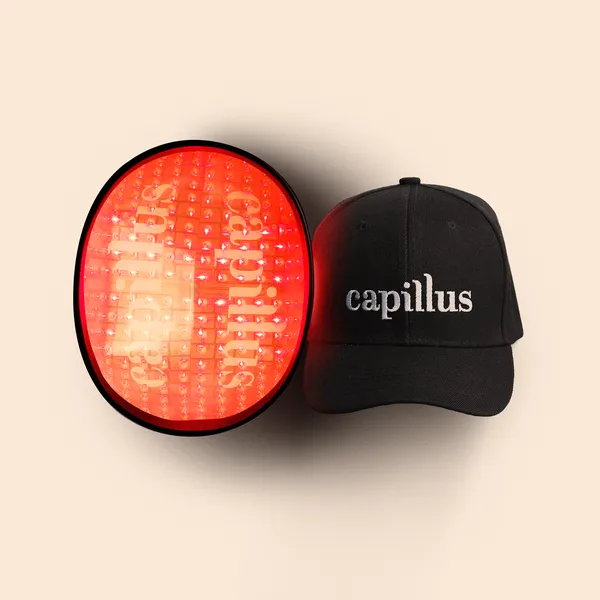
Capillus publishes the most complete safety notes we read: laser class, compliance standard, precautions and a strict 6-minute limit.
Medicines and conditions brands flag
The most explicit list we found is on the Capillus product page:
- "Laser therapy should not be used in conjunction with medications or products that are photosensitizing."
- "Consult with your physician before using the Capillus cap if; you have cancer of the scalp; you are sensitive to light of 650 nm in wavelength."
iRestore points buyers to its user manual for "Indications of Use, Contraindications, Warnings, and Precautions". If you take any medicine that warns about sunlight on its label, or use photosensitizing skin products, ask your doctor or pharmacist before you start any light device.
Early shedding
Some people panic in month two. iRestore's own timeline says to expect "no change or increased shedding" in the first three months. That is the brand's description of a normal start, and it is one more reason to photograph your scalp from day one, so you judge on pictures rather than on the hair in your brush. If shedding is heavy, sudden or patchy, stop guessing and see a doctor: it may have a cause no device addresses.
More is not better
It is tempting to wear a cap twice as long "to speed things up". Capillus says: "Exceeding the recommended times or frequency will not increase the effect of the Capillus cap; and may in fact cause a negative effect. Do not exceed recommended usage." iRestore advises against using its Essential every day. Stick to the schedule printed by the maker:
| Device | Maker's schedule |
|---|---|
| Capillus PRO | 6 min daily |
| iRestore Professional | 25 min every other day |
| Kiierr 272 Premier | 30 min every other day |
| Theradome PRO | 20 min twice a week |
| HairMax PowerFlex 272 | 7 min, 3 times a week |
| REVIAN RED | 10 min daily |
What the FDA clearance tells you about safety
A 510(k) clearance means FDA found the device substantially equivalent to one already on the market, including on safety, for a stated use. It does not mean FDA tested your particular cap, and it does not cover uses outside the indication. Lasers also fall under FDA's radiation-safety rules for laser products, which is the "21 CFR 1040" Capillus cites.
Two practical consequences. First, buy the device from the brand or an authorized seller, so you get the cleared product with its manual and warnings, not a lookalike. Second, use it for what it is cleared for, on the schedule printed in the box.
A simple safety routine
- Read the manual's warnings page once, properly, before the first session.
- Put the cap on before switching it on, and switch it off before taking it off if your model has a switch.
- Keep it dry and clean: HairMax, for example, tells owners to wipe the laser window with a soft, damp cloth and avoid solvents or alcohol.
- Store it away from children and pets, and charge it on the supplied charger only.
- Stop and call your doctor if your scalp becomes irritated, painful or unusually red.
None of this is complicated, and it keeps a low-risk device low-risk.
Who should talk to a doctor first
Everyone, ideally, but especially if:
- your hair loss started suddenly, comes in patches or follows an illness, pregnancy or new medicine;
- you have very advanced hair loss or bald areas (iRestore says its devices are "not intended for people who are bald or have advanced hair loss");
- your skin is Fitzpatrick type V or VI (the indications we read cover types I to IV);
- you take photosensitizing medicines or have a scalp condition.
A short appointment costs less than a cap you cannot use. Once you have the green light, our buying checklist takes you through the rest.
Nothing here is medical advice. Hair loss has many causes: talk to your doctor or a dermatologist before you start a device, and follow the maker's instructions.
Our three picks for this guide
Scores come from our published formula; the full list is in the ranking.
Capillus PRO
Six minutes a day under a cap that looks like a cap, from the brand that says it was first to FDA clearance.
See today's price Read the review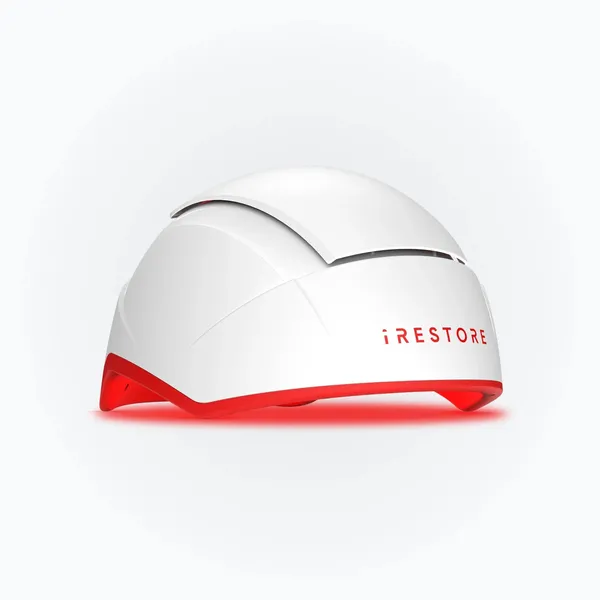
iRestore Professional
The helmet we would buy first: lots of light, a long guarantee and a sale price that undercuts most caps.
See today's price Read the review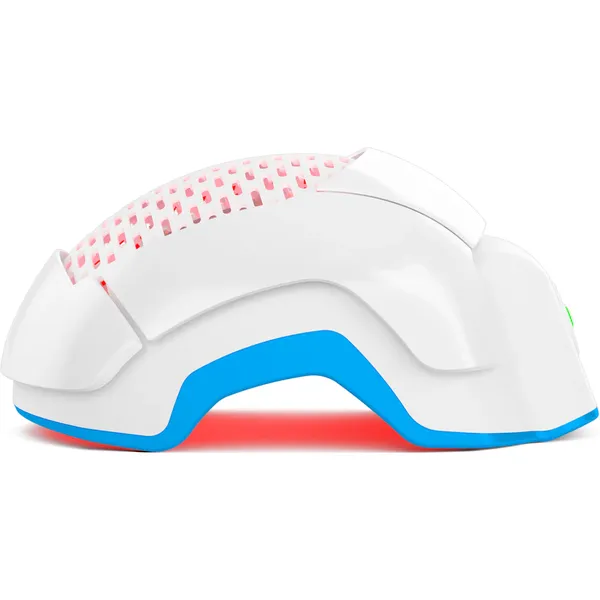
Theradome PRO LH80
Twice a week, 20 minutes, no cords: Theradome's 80-laser helmet.
See today's price Read the reviewReferences
- Brand product pages linked from each review, read November 11, 2026
Written by Marcus Hale, editor, laser hair-growth devices. Some links are affiliate links: if you buy through them, we may earn a commission at no extra cost to you. It never changes our scores. Disclosure.